Many businesses use the terms payment gateway and merchant account as if they mean the same thing. They do not. They are closely connected, and both sit inside the wider card payment process, yet each has a distinct job.
A simple way to think about it is this: one handles the movement of payment data, the other handles the movement of money. Once that distinction is clear, decisions around pricing, setup, risk, reporting, and growth become much easier.
Payment gateway definition and role in card payments
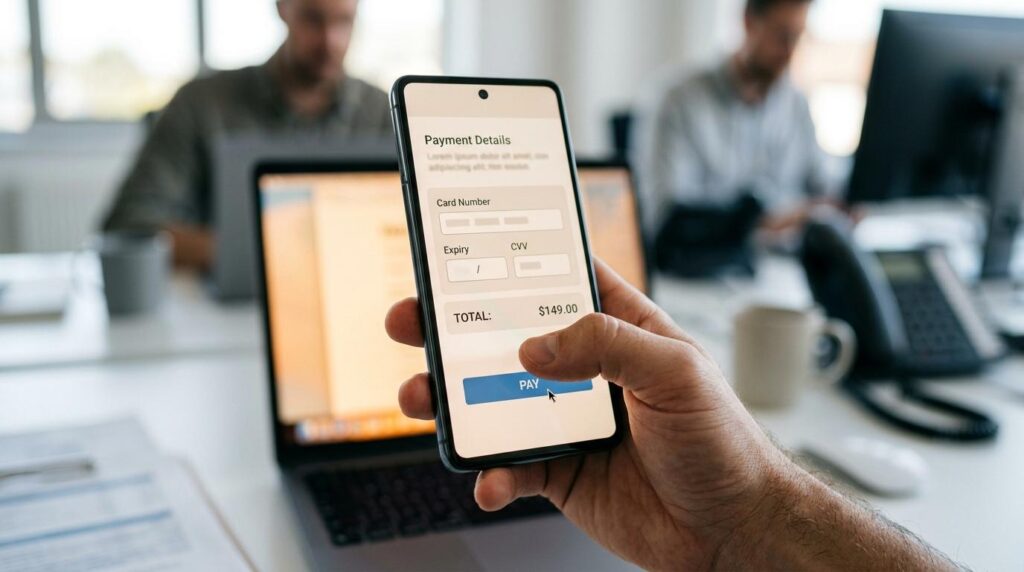
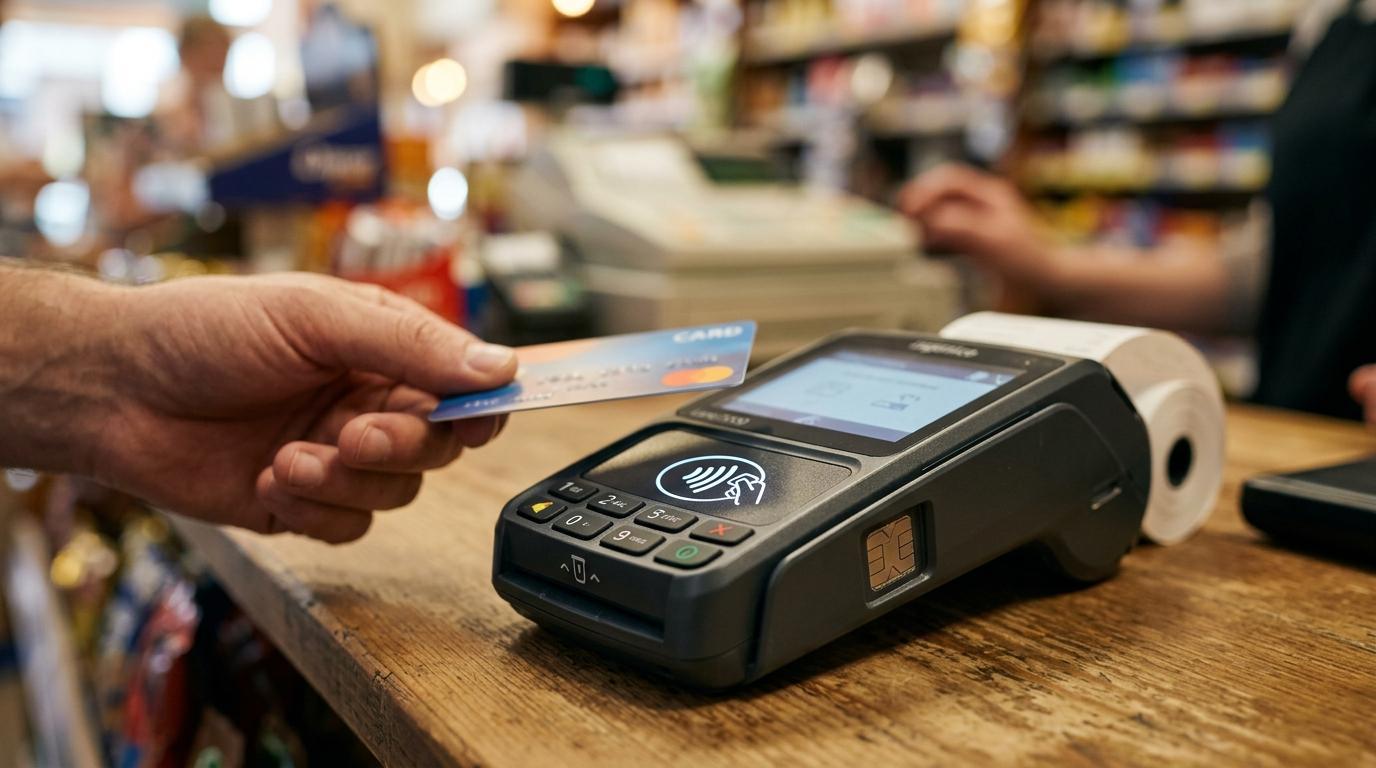
A payment gateway is the technology that captures a customer’s card details and sends them securely through the payment network for authorisation. It sits at the checkout, whether that checkout is on a website, inside an app, on a payment link, or on a card terminal.
When a customer enters their card details and clicks “pay”, the gateway encrypts the information, applies security checks, and passes the transaction to the relevant processor or acquiring bank. It then returns an approval or decline response within seconds. That speed is what keeps checkout smooth and gives both the merchant and the customer a clear, immediate result.
In practical terms, a payment gateway is responsible for:
- secure card data capture
- encryption and tokenisation
- authorisation requests
- fraud screening
- checkout integration
Without a gateway, an online business would have no secure method of collecting and transmitting card details. In-store, the same logic applies through card machines and point-of-sale systems, even though the customer experience looks different.
Merchant account definition and role in funds settlement
A merchant account is a specialist account used to receive approved card payment funds before they are paid into the business’s normal bank account. It is not the same as an ordinary business current account, and it is not usually where a business holds day-to-day working capital.
Its main purpose is settlement. Once a transaction has been approved, the funds flow through the acquiring side of the payments system into the merchant account. From there, they are settled into the business bank account according to the provider’s payout schedule, often within one to three business days.
That means the merchant account sits behind the scenes. Customers rarely know it exists, yet it matters a great deal for cash flow, chargebacks, reserves, underwriting, and compliance.
A few key points help separate the two:
- Gateway role: captures and transmits payment data securely
- Merchant account role: receives approved card funds before payout
- Gateway timing: works in real time during checkout
- Merchant account timing: works during settlement after approval
How payment gateway and merchant account work together
The easiest way to see the difference is to look at the transaction flow. The gateway comes first. The merchant account comes after authorisation.
A typical card payment follows this path:
- The customer enters card details at checkout.
- The payment gateway encrypts the data and sends it for authorisation.
- The issuing bank checks the card and available funds.
- An approval or decline is returned.
- If approved, the acquiring side captures the funds.
- The funds move into the merchant account.
- The payout reaches the business bank account later.
This is why the question is rarely “gateway or merchant account?” in a literal sense. Most card payment setups need both. The real choice is usually between a bundled service, where one provider wraps both into a single offering, and a dedicated setup, where the business has its own merchant account and gateway arrangement.
Payment gateway vs merchant account: key differences at a glance
The two tools are linked, but their priorities are very different.
| Area | Payment gateway | Merchant account |
|---|---|---|
| Main purpose | Securely sends payment data for authorisation | Holds approved card funds before payout |
| What it handles | Data | Money |
| Customer visibility | High, as part of checkout | Low, mostly behind the scenes |
| Speed impact | Affects real-time checkout response | Affects settlement timing |
| Core focus | Security, tokenisation, fraud checks | Underwriting, payout, chargebacks, reserves |
| Typical setup | API, hosted page, plugin, POS integration | Acquirer-backed merchant facility |
| Compliance emphasis | PCI DSS, secure data handling, authentication | KYC, AML, chargeback risk, scheme rules |
That table also explains why businesses often speak about payments in the wrong order. The gateway tends to get more attention because it is visible. The merchant account tends to matter more once scale, cash flow, and risk become bigger priorities.
Payment gateway security vs merchant account compliance
Security matters on both sides, though the focus changes.
The gateway is primarily concerned with protecting cardholder data. That includes encryption, tokenisation, 3D Secure, CVV and address checks, fraud scoring, and safe integrations with websites, apps, and terminals. If the gateway is poorly built, checkout confidence falls and fraud exposure rises.
The merchant account is more closely tied to financial and regulatory controls. It involves underwriting the business, monitoring chargeback exposure, checking business activity, and applying scheme and banking rules. This is one reason some merchants face reserves or delayed payouts. The provider is managing risk linked to the flow of funds, not only the flow of data.
For businesses, the split often looks like this:
- Gateway security: card data protection and transaction screening
- Merchant account compliance: business verification and funds risk controls
- Shared objective: safer payments with fewer declines and fewer disputes
Why settlement timing matters for growing businesses
A fast authorisation response does not mean instant access to funds. This catches many businesses out, especially early on.
The checkout may confirm a successful payment in seconds, but the money still needs to pass through settlement. The merchant account is where that delay becomes visible. Payout timing depends on the provider’s process, the merchant’s sector, transaction history, fraud profile, and whether any transactions are flagged for review.
This matters most for businesses with tight cash cycles. Hospitality, travel, subscription services, retail, and marketplaces often need clear visibility on when money will arrive, not just whether the sale was approved.
A modern provider can make this easier with a unified dashboard, quicker onboarding, and better reporting across online, in-store, mobile, pay-by-link, and MOTO payments. For merchants trading across channels, that single view can remove a lot of operational friction.
Practical implementation details matter too; WP Assistance’s walkthrough on implementing Nets, Stripe or MobilePay in WordPress shows how plugin-level choices shape 3D Secure flows, tokenisation and the quality of payout reconciliation data.
Which setup suits different business models
The best structure depends on volume, risk, technical resources, and growth plans. A small online seller has very different needs from a large retailer operating across several countries.
In broad terms, bundled solutions are popular because they are quick to deploy. Dedicated merchant accounts become more attractive when a business wants more control over pricing, underwriting, routing, or settlement terms.
Here is a practical comparison:
| Business type | Often best fit | Why it works |
|---|---|---|
| New eCommerce brand | Bundled gateway and merchant setup | Faster launch, simpler integration, lighter admin |
| Subscription business | Bundled early, dedicated later | Easy recurring billing at first, more control as volume rises |
| High-volume retailer | Dedicated merchant account with strong gateway | Better fee control and stronger operational flexibility |
| Higher-risk sector | Specialist merchant account | Underwriting tailored to the risk profile |
| Omnichannel brand | Integrated provider | Shared reporting across online and in-person payments |
A useful rule is to match the payment setup to the stage of the business, not just its current sales channel. The right system should support the next phase of growth, not only today’s checkout page.
Cost differences between payment gateway and merchant account models
Pricing can look simple on the surface and become complicated very quickly. Gateway-led bundled services often use straightforward transaction pricing. Dedicated merchant accounts may introduce monthly fees, setup fees, chargeback fees, and more detailed acquiring costs, though they can become cost-efficient at scale.
That does not mean one model is always cheaper. It means the cost picture changes as the business grows.
A business should review:
- transaction fees
- monthly platform costs
- payout terms
- chargeback fees
- cross-border charges
- hidden support or integration costs
Price is only one part of the decision. Approval rates, fraud controls, onboarding speed, payout consistency, and support quality all affect revenue in ways that matter just as much as headline rates.
Why integrated payment providers appeal to modern merchants
Many merchants no longer want separate providers for gateway technology, merchant acquiring, fraud tools, reporting, and in-store hardware. They want one system that works across every touchpoint.
That is where integrated providers stand out. A platform like CardPayGO can combine gateway services, acquiring support, card payment machines, mobile terminals, pay-by-email links, MOTO payments, shopping cart tools, fraud prevention, and cross-border capabilities inside one environment. For businesses operating across web, phone, and physical locations, that kind of joined-up setup is attractive.
The main strengths of an integrated model are easy to see:
- Faster onboarding: less coordination between separate vendors
- Single dashboard: one place to view transactions, payouts, and risk
- Omni-channel support: online, in-store, mobile, and remote payments
- Operational clarity: fewer moving parts when problems need fixing
There is also a strategic advantage. When the gateway, reporting, and acquiring relationship sit together, it is easier to spot trends in declines, fraud attempts, chargebacks, and settlement performance. That creates room for sharper decision-making.
What businesses should ask before choosing a payment setup
Choosing well starts with the right questions. A provider should be able to explain not only how payments are accepted, but also how funds move, when they settle, what triggers reviews, and how support works when something goes wrong.
Before signing up, it helps to ask:
- How are payments handled? Hosted checkout, API, payment links, terminals, or all of the above
- How are funds settled? Payout timing, reserve rules, and reporting access
- How is fraud managed? 3D Secure, AI tools, manual review options, chargeback support
- How scalable is the setup? Capacity for new countries, channels, and currencies
A strong answer should feel clear rather than technical for the sake of it. Payments are complex behind the scenes, yet the provider’s job is to make that complexity manageable.
The real difference between a payment gateway and a merchant account is straightforward once the jargon drops away. One gets the transaction approved securely. The other gets the money settled properly. When both are well matched to the business, payments stop being a bottleneck and start becoming a solid foundation for growth.